Clear answers beneath your next floor
Asbestos Floor Tile Removal in Scarsdale
Discuss the floor before work continues. Get a Free Estimate
Clear answers beneath your next floor
Discuss the floor before work continues. Get a Free Estimate
Planning to replace older floor tiles? Do not sand or grind suspected asbestos flooring or its backing to prepare the surface. The Environmental Protection Agency specifically advises against sanding or trying to level asbestos flooring. US EPA
Scarsdale Asbestos Connect helps you define the questions around asbestos floor tile removal in Scarsdale and nearby Westchester towns. Tell us which rooms are involved, whether the floor has been tested, and what your flooring installer expects after removal. A useful estimate should distinguish the tiles from any associated materials and explain the agreed condition of the surface at handover. Do not lift tiles to collect information for an estimate; start with existing reports and a description of the room.
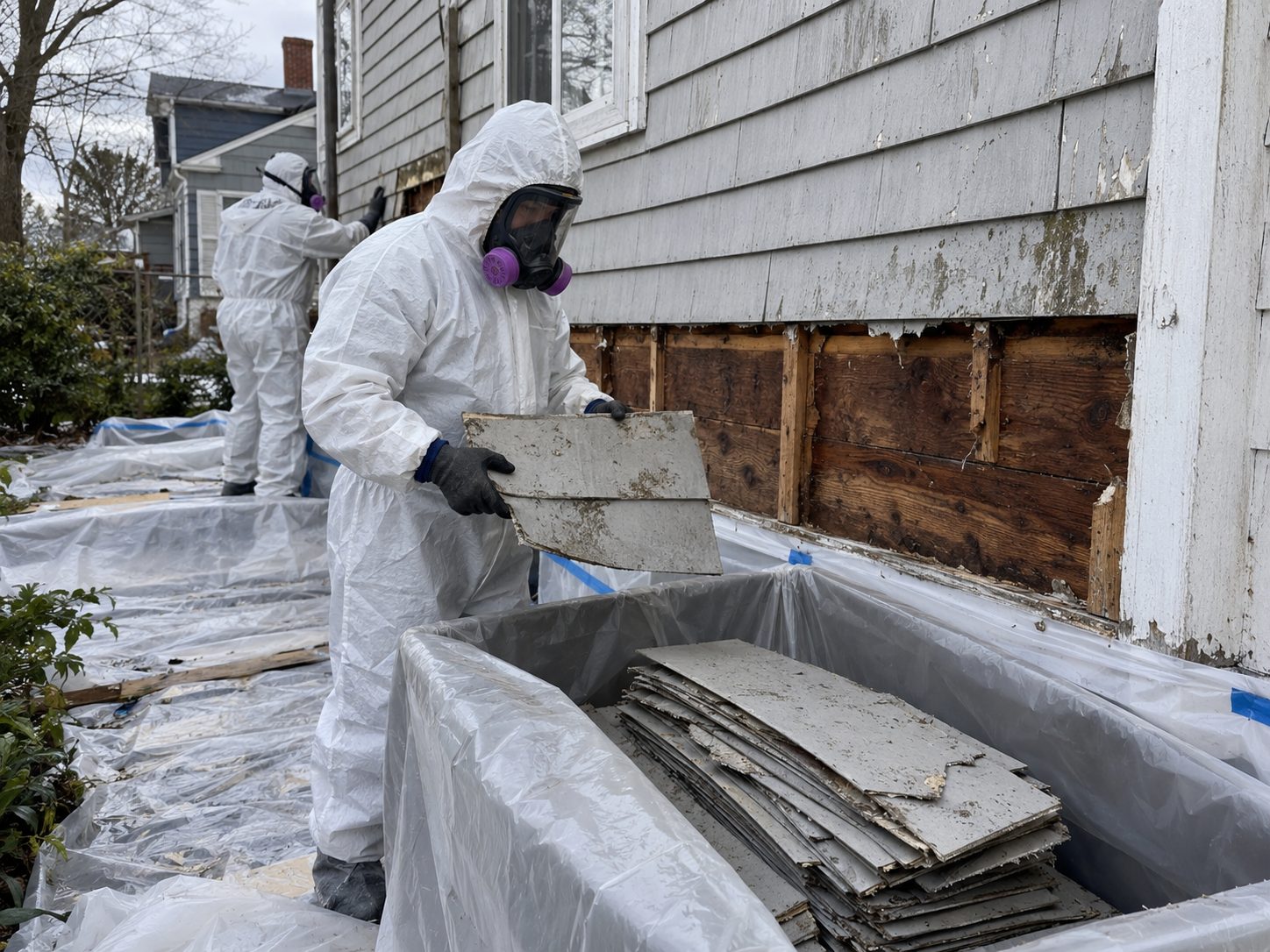
Separate the tile from the adhesive question Some floor tiles and the adhesive beneath them can contain asbestos. A finding about one material should not be treated as a finding about every layer of the floor. NJ.gov Ask the assessor and removal contractor to connect the proposal to the specific materials identified in the report.
Start with the room boundaries and the flooring area that has been assessed. Explain whether the project includes closets, an adjoining landing, or another connected section that you expect to receive new flooring. We encourage a description that another person could follow without relying on a conversation from several weeks earlier. The estimate should make clear which identified tiles are included and what lies outside the agreed work. Discuss the furniture, appliances, and stored belongings normally occupying that space, but leave preparation instructions to the responsible contractor. Ask who will handle each agreed preparation task and whether it is included in the price. A room-specific plan should also explain how access will be managed and what information your flooring installer will receive before returning to begin the next stage.
An estimate for tile removal should not leave you guessing about the adhesive or backing identified in the assessment. Ask whether those materials are included, excluded, or awaiting further professional evaluation. Share any report that distinguishes separate layers, and ask how the written scope corresponds to those findings. The aim is a complete conversation about the floor assembly involved in your project, not an assumption that lifting the visible tiles settles every question. Tell us what the new flooring contractor requires from the surface after asbestos work is complete. Ask the contractors to resolve any difference between the agreed removal scope and the proposed installation method before you approve the job. Put that understanding in writing, including who is responsible for any later preparation that falls outside the asbestos removal agreement.
For a basement or utility-room floor, tell us about the usual entrance, stairs, laundry equipment, and storage arrangements. Explain whether anyone needs regular access to another part of the level during the proposed project. We use these questions to help you describe the property clearly, not to assume that every basement requires the same setup or that an exterior door automatically resolves access concerns. Ask the removal contractor to explain which areas will be restricted and what household arrangements should be made before the work begins. Your estimate should identify any agreed preparation separately from the tile removal itself. We also recommend discussing the handover with the person installing the replacement floor so that you are not left organizing another visit simply to establish what condition the surface needs to be in.
The end of a tile-removal project should be described as clearly as the beginning. Ask what the contractor means by completion, which identified materials will have been addressed, and what records will be available. Avoid assuming that asbestos removal includes every step needed for the installation of a new floor. Request a separate explanation of any leveling, moisture-related work, repair, or finishing that another contractor may be asked to undertake. We encourage you to share that written understanding with your flooring installer before approving dates. Ask the responsible professionals to confirm when the affected area is released for the next trade and how any remaining restrictions will be communicated. A practical handover gives you an agreed starting point for the new floor without turning the asbestos proposal into an undefined promise of complete room restoration.
| Service | Estimated Cost | Average |
|---|---|---|
| Identified floor tile removal | Written estimate after scope review | Not published |
| Tile and identified associated adhesive | Written estimate after scope review | Not published |
| Several rooms or connected flooring areas | Written estimate after scope review | Not published |
No verified numerical range or company average is published. Compare estimates using the same rooms, identified layers, preparation responsibilities, monitoring arrangements, waste handling, and handover condition. Ask whether charges are fixed for the described scope or depend on quantities confirmed during assessment.
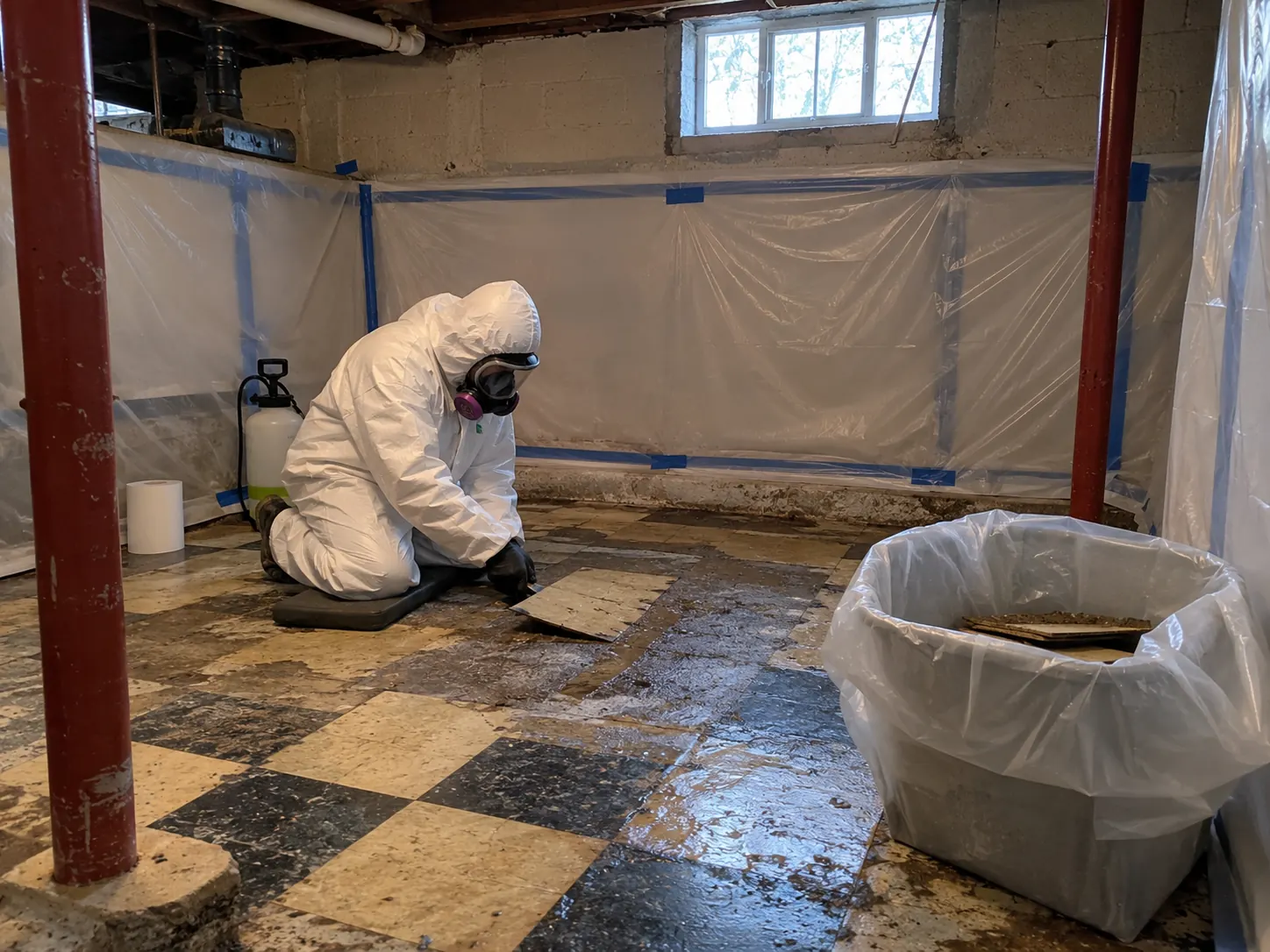
We encourage a proposal that names the identified materials. You should not have to infer whether the adhesive or backing is included in a tile-removal price.
We ask what your installer expects after the asbestos work. That helps you identify gaps between removal and the next stage before agreeing to dates.
Your stairs, storage, appliances, and access needs belong in the discussion. We focus on the actual room instead of a generic price for an unspecified floor.
Tell us which rooms are involved and whether you have a material report. Start with a clear flooring scope, not a guess.
Free — no obligations
Provide the property address, affected rooms, existing laboratory reports, and replacement-floor plans. Describe any earlier work without disturbing the flooring to investigate further.
Ask which tiles, adhesive, backing, or other assessed layers the proposal covers. Any unassessed area or unresolved material should be clearly identified before pricing is treated as final.
Review preparation responsibilities, household arrangements, and the expected surface condition. Share the agreed scope with the flooring installer so the next stage is planned consistently.
Obtain the applicable completion information and release confirmation from the responsible professionals. Keep the removal records with your flooring project documents.